Why metals supply chains are becoming more connected

Gonzalo De Olazaval
Global Head of Metals and Minerals
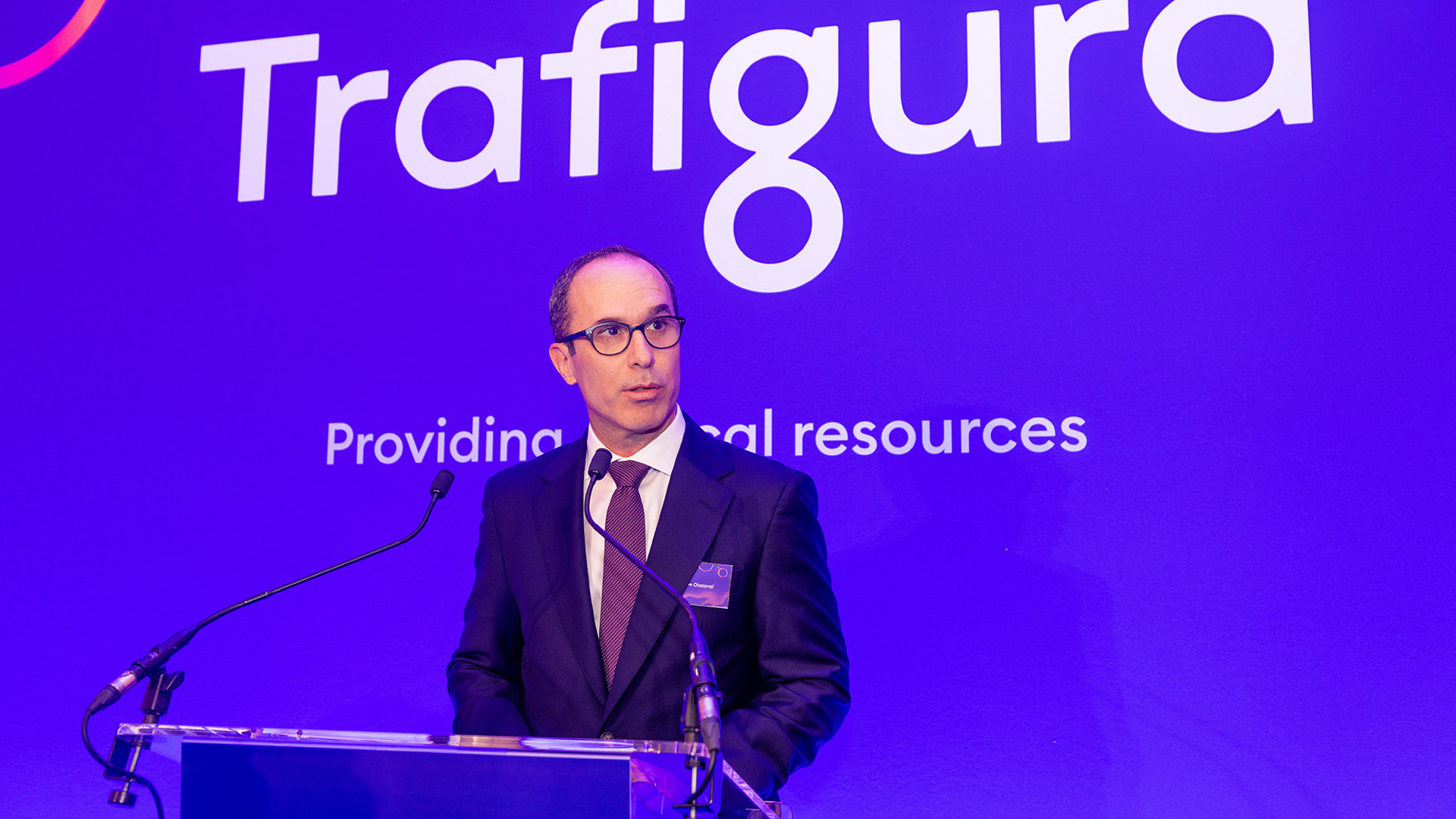
Marking the start of LME Week 2026, Gonzalo shared his reflections on the global metals market and what's changed over the past year.
Around the world, governments want metals to be more local. They are pursuing more domestic production, more domestic processing, shorter supply chains and strategic stockpiles.
The physical market is moving in the opposite direction. Nearly half of all metals produced globally are now traded across borders. Over the past year, the minerals and metals Trafigura traded travelled more than 80 million kilometres, almost 2,000 times around the world.
Why is the world becoming more connected when many want it to be less so? The answer lies in how demand and supply have changed.
"The world may want simpler, shorter supply chains, but the reality is more complex. Trafigura is investing to help its customers and partners navigate that complexity, so they can focus on their own businesses."
Gonzalo De Olazaval
Global Head of Metals and Minerals
The map of demand has changed
New strategic industries are replacing traditional sectors as the main drivers of metals demand growth. Over the last five years, electric vehicles, solar panels, wind power and batteries have reshaped consumption patterns. This year, artificial intelligence is the new industry in focus. More than USD1 trillion is expected to be invested in data centres in 2026. That is roughly ten times the capital expenditure of the world's 100 largest miners last year.
These industries are not concentrated in one country. For over two decades, almost all growth in metals consumption came from China. Today, demand outside China is growing two to three times more quickly. Metals demand now comes from more industries and more regions, and that diversity increases the need for cross-border trade.
The risks above ground
The key question is, can supply keep pace? The honest answer is not without difficulty.
For most of the industry's history, the main concern was what lay underground. Today, some of the greatest risks are above ground: permitting, infrastructure, community relations, taxation, export restrictions and, sadly, conflict in many parts of the world.
In some cases, the industry has also not invested enough. Zinc mine production is lower today than in 2015. Constrained mine supply puts pressure on zinc smelters. That has consequences for critical metals such as germanium and indium – byproducts of zinc smelting – where demand is increasingly driven by energy, technology and military security.
Each of these risks holds back the growth of the sectors that depend on metals.
Investing across the metals ecosystem
Connecting buyers and sellers is our core business – but it is where Trafigura's role starts. Every stage of the supply chain is important, and so are the logistics that connect them.
As the world has become more complex, the company has invested across the metals ecosystem, in strategic infrastructure, mining production and global logistics, to help unlock the supply the world needs.
Recent examples include:

Financing
We have deployed USD7 billion of capital over the past three years to help counterparties build supply of metals and minerals, including new mining production.

Power
We signed a framework agreement to support development of a 200-kilometre, 700-megawatt transmission line to bring more power to the Copperbelt in Zambia and the Democratic Republic of Congo (DRC).

Rail
On the 1,300-kilometre Lobito Atlantic Railway, of which Trafigura is a shareholder, rail volumes are up 60 percent so far this year.

Logistics
Impala Terminals, Trafigura's joint venture with IFM, has opened a new state-of-the-art metals storage facility in Chile.

Processing
Providing commercial certainty to enable new processing capacity, including the signing of a term sheet to develop a 300,000 tonne per annum primary aluminium smelter in Egypt.
Navigating complexity
The world may want simpler, shorter supply chains, but the reality is more complex. Trafigura is investing to help its customers and partners navigate that complexity, so they can focus on their own businesses.
You may also be interested in
Explore our publications and get the latest news and insights.